 Search for...
 English
 Español
Soft Lint-Free Disposable Household Cleaning Wipe

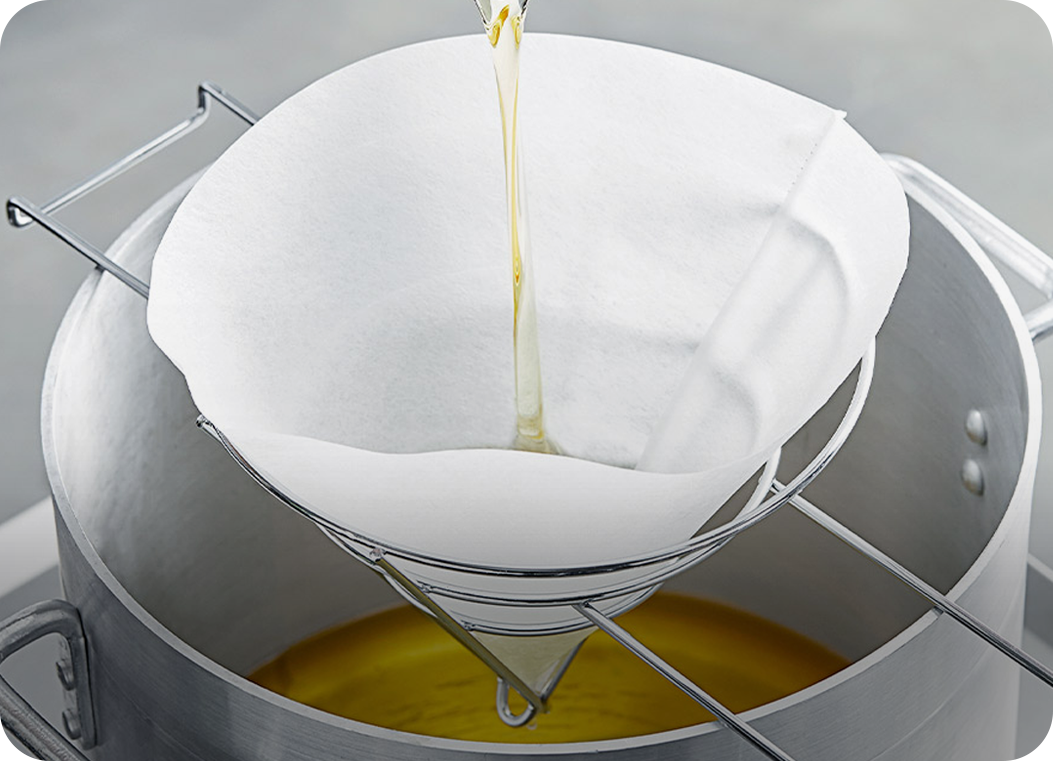
Cooking oil filter papers are increasingly recognized as essential tools in large-scale catering operations. Restaurants, hotels, and industrial kitchens rely on these specialized papers to maintain oil purity, improve food quality, reduce operational costs, and comply with safety regulations. With high-volume frying and repeated oil usage, maintaining clean oil becomes a critical factor in ensuring consistent taste, texture, and presentation of fried foods.
Large-scale catering operations face unique challenges compared to smaller kitchens. Frequent frying cycles, high-temperature cooking, and continuous oil turnover can lead to the accumulation of food particles, carbon residues, and impurities. Cooking oil filter papers provide an efficient and practical solution to these challenges, extending oil life while safeguarding the flavor and appearance of food.
Content
One of the primary benefits of using cooking oil filter papers in large-scale catering is maintaining consistent food quality. Residual particles in cooking oil can negatively affect the flavor, aroma, and color of fried foods. By removing suspended particles and sediment, filter papers prevent undesirable off-tastes and uneven browning, ensuring each batch of food meets the expected quality standards.
Moreover, clean oil reduces the risk of burning or scorching, which can impact both taste and nutritional value. Caterers serving hundreds or thousands of meals daily benefit from the uniform cooking results provided by filtered oil, enhancing customer satisfaction and brand reputation.
Cooking oil represents a significant operational cost for large-scale catering. Frequent replacement of degraded oil not only increases expenses but also generates environmental waste. Cooking oil filter papers allow caterers to prolong the usability of oil by removing food particles, carbon deposits, and other contaminants that accelerate oil breakdown.
Filtered oil experiences reduced oxidation and slower degradation, which maintains its functional properties for a longer period. This enables catering operations to achieve cost efficiency while minimizing waste, aligning with both economic and environmental objectives.
Large-scale kitchens often need to filter oil multiple times per day. Cooking oil filter papers simplify this process by enabling quick, efficient filtration without requiring specialized equipment. This allows kitchen staff to maintain workflow efficiency while ensuring the oil remains clean and ready for subsequent frying cycles.
By reducing downtime associated with oil maintenance, filter papers help caterers handle high-volume frying operations more effectively. This efficiency is crucial in settings such as hotels, event catering, and fast-food chains, where timely service and consistency are critical.
Regulatory compliance is critical for large-scale catering. Cooking oil filter papers help kitchens meet health and safety standards by minimizing oil contamination. Residual food particles, if left unfiltered, can harbor bacteria or accelerate oil degradation, posing potential risks to consumers.
Using certified food-grade filter papers ensures that the filtration process does not introduce contaminants and maintains hygienic standards. This is especially important for institutions such as hospitals, schools, and large catering events, where food safety is a non-negotiable requirement.
Sustainable practices are increasingly important in the catering industry. Cooking oil filter papers contribute to sustainability by extending oil life, thereby reducing oil waste. Less discarded oil lowers environmental impact and decreases the burden on waste management systems. Additionally, many filter papers are biodegradable or recyclable, further enhancing their eco-friendly credentials.
By integrating filter papers into daily operations, large-scale caterers can achieve both operational efficiency and environmental responsibility. This aligns with growing consumer expectations for sustainable and responsible food service practices.
Cooking oil filter papers are more than a convenience—they are essential tools for large-scale catering. They ensure consistent food quality, extend the life of cooking oil, improve operational efficiency, and help maintain compliance with food safety regulations. Additionally, they support sustainability initiatives by reducing waste and environmental impact.
In high-volume kitchens, where hundreds or thousands of meals are prepared daily, filter papers provide a practical and cost-effective solution to maintain oil quality, safeguard food safety, and ensure that every dish meets the high standards expected by consumers. Their adoption represents a simple yet critical investment in both quality and efficiency.


JIAXING HONGJIE COMMODITY CO., LTD is located near Shanghai and Hangzhou in Jiaxing City, Zhejiang Province, China. We are trading& manufactory company. our factory and office are in Jiaxing city.

Factory Add: 3rd floor, BLDG 3, No.379 Ziyu Road, Daqiao Industrial Zone, Jiaxing, Zhejiang, China.

+86-573-82313085

+86-573-82091210

Copyright © JIAXING HONGJIE COMMODITY CO., LTD
The information provided on this website is intended for use only in countries and jurisdictions outside of the People's Republic of China.
Wholesale Nonwoven Wet Wipes Manufacturers
