 Search for...
 English
 Español
Soft Lint-Free Disposable Household Cleaning Wipe

Disposable gloves are single-use hand protection designed to create a barrier between the wearer's skin and hazardous materials, contaminants, or infectious agents. Choosing the right disposable glove material, thickness, and certification for your specific task is the difference between genuine protection and a false sense of security — the wrong glove can fail through chemical permeation, puncture, or allergic reaction before the task is even complete.
This guide covers every practical aspect of disposable gloves: the main material types and what each excels at, how thickness and AQL ratings affect protection, how to match gloves to specific industries and tasks, sizing, regulatory standards, and the environmental considerations that are increasingly relevant to bulk glove purchasing decisions.
Content
Material selection is the most consequential decision when choosing disposable gloves. Each material has a distinct chemical resistance profile, elasticity, tactile sensitivity, and cost point that makes it better suited to some applications than others.
Latex gloves are made from natural rubber and offer the best combination of elasticity, tactile sensitivity, and comfortable fit of any disposable glove material. They conform closely to the hand, making them a traditional favorite in medical, dental, and laboratory settings. Latex provides good resistance to water-based substances, dilute acids, and many biological fluids. However, latex allergies affect an estimated 1–6% of the general population and up to 17% of healthcare workers with regular exposure — a well-documented occupational health concern that has driven significant adoption of latex-free alternatives. Latex gloves are not appropriate where latex sensitization is a risk or where the wearer or patient has a known latex allergy.
Nitrile is currently the dominant disposable glove material in medical, industrial, and food service applications globally. It is latex-free, offers superior puncture resistance compared to latex gloves of the same thickness, and provides excellent resistance to oils, fuels, certain solvents, and many chemicals. Nitrile gloves are approximately 3 to 5 times more puncture-resistant than latex, which is why they are the standard for phlebotomy, tattoo work, automotive servicing, and chemical handling. The material has lower elasticity than latex, but modern thin-wall nitrile formulations (3–4 mil) have closed the comfort gap significantly. Nitrile costs more per glove than latex but less than neoprene or specialty materials.
Vinyl gloves are the lowest-cost disposable option, made from PVC with plasticizers to provide flexibility. They are latex-free and appropriate for low-risk, short-duration tasks where barrier protection against biological or light chemical hazards is needed — food preparation, light cleaning, hair coloring, and non-sterile patient care. Vinyl has significantly lower elasticity than nitrile or latex and is more prone to tearing under tension, making it unsuitable for tasks requiring a close fit, extended wear, or exposure to oils and many chemicals. Vinyl gloves are not recommended for medical procedures, blood contact, or chemical handling.
Neoprene offers a broad chemical resistance profile that overlaps with both nitrile and latex while being latex-free. It provides good resistance to acids, bases, alcohols, and some solvents that nitrile does not handle well. Neoprene disposable gloves are used in laboratory chemical handling and pharmaceutical compounding where wide-spectrum chemical protection is required. They are more expensive than nitrile and less commonly stocked. Other specialty materials include polyethylene (PE) film gloves — thin, loosely fitting gloves used for very short-duration food handling where tactile sensitivity is not needed — and chloroprene, a synthetic neoprene alternative with similar properties.
The table below compares the four primary disposable glove materials across the performance dimensions most relevant to practical selection decisions:
| Property | Latex | Nitrile | Vinyl | Neoprene |
|---|---|---|---|---|
| Puncture Resistance | Good | Excellent | Poor | Good |
| Elasticity / Fit | Excellent | Good | Fair | Good |
| Chemical Resistance (oils/fuels) | Poor | Excellent | Poor | Good |
| Chemical Resistance (acids/bases) | Good | Good | Fair | Excellent |
| Tactile Sensitivity | Excellent | Very Good | Fair | Good |
| Latex Allergy Risk | Yes | None | None | None |
| Relative Cost (per glove) | Low–Medium | Medium | Low | High |
| Best Applications | Surgery, dental, precision lab work | Medical, industrial, chemical, tattoo | Food service, light cleaning, hair care | Broad chemical labs, pharmaceutical |
Disposable glove thickness is measured in mils (1 mil = 0.001 inch = 0.0254 mm) and is one of the most frequently cited specifications in glove purchasing — and one of the most frequently misunderstood. Thickness affects durability and chemical resistance duration, but it is not the only measure of protection quality.
A critical point: thickness ratings are typically measured at the palm, not at the fingertips, where gloves are thinnest and most prone to failure. Fingertip thickness can be 20–30% less than the stated palm measurement. Always read manufacturer data sheets for fingertip thickness if precision protection is critical.
AQL (Acceptable Quality Level) is a statistical measurement of the maximum acceptable number of defective gloves (pinholes, weak spots, or tears) in a batch, expressed as a percentage. The lower the AQL number, the higher the quality standard. AQL ratings for disposable gloves follow international standard ISO 2859-1:
For any application involving blood, infectious body fluids, or hazardous chemicals, always specify AQL 1.5. Using AQL 4.0 gloves in a medical procedure context is a safety compromise that is not justified by the modest cost saving per box.
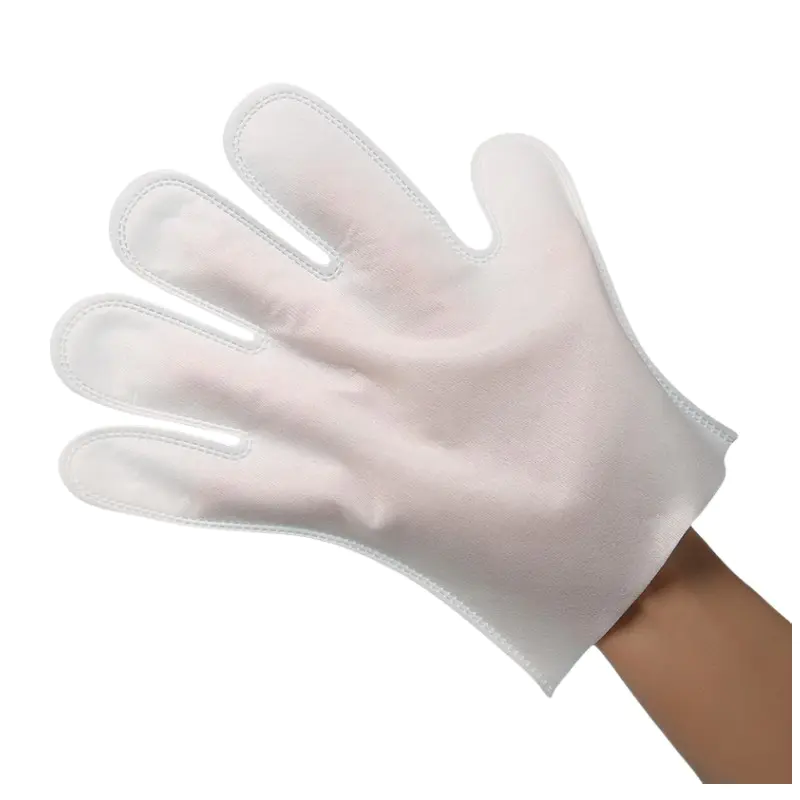
Historically, disposable gloves were dusted with cornstarch powder on the inside to make donning easier and reduce hand sweating during extended wear. Powdered gloves are now largely obsolete in medical settings and increasingly restricted or banned across most regulated industries. The U.S. FDA banned powdered surgical and examination gloves in 2017, citing documented risks: the powder can carry latex proteins into the air (worsening latex allergy risks), contaminate surgical wounds, cause granuloma formation, and compromise the sterile field in operating environments.
Powder-free gloves are produced using chlorination or polymer coating processes that modify the inner glove surface to reduce tackiness and ease donning without powder. The small remaining legitimate use cases for powdered gloves are in certain industrial applications outside healthcare where airborne protein or contamination concerns are absent. For any medical, food, or laboratory application, always specify powder-free.
The sterile/non-sterile distinction is absolute and non-negotiable in regulated medical environments. Sterile gloves (also called surgical gloves) are manufactured, packaged, and sterilized to eliminate microbial contamination and are individually packaged in pairs to maintain sterility until the moment of use. They are required for any procedure where the glove contacts a sterile field — surgical procedures, catheter insertion, and invasive medical examinations.
Non-sterile examination gloves (dispensed from a box of 100) are manufactured to medical AQL standards but are not individually sterilized. They are appropriate for examination, patient care activities that do not require a sterile field, laboratory work, and all industrial and food service applications. Sterile surgical gloves cost approximately 5 to 10 times more per pair than non-sterile examination gloves of the same material, and their use should be strictly limited to procedures that require them to avoid unnecessary cost without safety benefit.
The right glove specification varies significantly by industry and task. Using the same box of general-purpose nitrile gloves for every application in a facility is a common practice that often results in either over-specification (paying for protection that isn't needed) or under-specification (using gloves not designed for the hazard present).
Standard examination gloves: nitrile or latex, 4–5 mil, AQL 1.5, powder-free, non-sterile from a dispenser box. Surgical procedures: sterile latex or sterile neoprene (for latex-allergic surgeons), individually packaged, AQL 1.5. Chemotherapy drug handling: nitrile gloves meeting ASTM D6978 standard for chemotherapy permeation resistance — not all nitrile gloves qualify, and the standard must be explicitly confirmed on the product data sheet.
Vinyl or nitrile gloves, powder-free, food-contact certified (compliant with FDA 21 CFR or EU 10/2011 food contact regulations). Vinyl is widely used for short-duration tasks like sandwich preparation; nitrile is preferred for tasks involving oils, fats, and acidic foods where vinyl degrades quickly. Colored gloves (commonly blue or black) are used in food processing so that any torn glove fragment is visually detectable against food product — an important food safety specification in meat processing, bakery, and ready-meal production.
Nitrile, 6–8 mil, industrial AQL grade. Black nitrile gloves are the industry standard in automotive workshops because the color masks grease and oil staining while providing superior resistance to petroleum products, brake fluid, and many automotive chemicals. For tasks involving specific solvents (acetone, MEK, THF), verify chemical breakthrough times on the manufacturer's chemical resistance chart — no disposable glove provides infinite protection against aggressive solvents, and breakthrough times at these thicknesses may be measured in minutes rather than hours.
Nitrile, 4–6 mil, black, AQL 1.5, powder-free. The black color is both aesthetic (professional appearance) and practical (it doesn't show ink). Latex is also used but carries the allergy risk for both practitioner and client; nitrile is preferred for allergy safety. Gloves must be changed between clients and whenever changing from one work zone to another during a single session.
Vinyl for light cleaning with dilute detergents; nitrile 6–8 mil for heavy cleaning with bleach, disinfectants, or industrial cleaning chemicals. For bathroom and biohazard cleaning, AQL 2.5 or better nitrile is appropriate. Extended tasks with strong disinfectants require verifying the glove's chemical resistance to the specific products in use — chlorine bleach, quaternary ammonium compounds, and hydrogen peroxide all have different material interactions.
An ill-fitting disposable glove compromises both protection and performance. A glove that is too tight creates excess tension in the material, reducing its effective barrier thickness and increasing tear risk at fingertips and the back of the hand. A glove that is too loose bunches at the fingers, reduces grip and tactile control, and can catch on objects and pull off unexpectedly.
Standard sizing runs XS, S, M, L, XL, and XXL for most brands. The measurement that most accurately predicts glove fit is hand circumference measured around the widest part of the palm (excluding the thumb), with the hand flat and fingers together. General size guidelines:
| Glove Size | Hand Circumference (cm) | Hand Circumference (inches) |
|---|---|---|
| XS | ≤ 16 cm | ≤ 6.3 in |
| S | 17–18 cm | 6.7–7.1 in |
| M | 19–20 cm | 7.5–7.9 in |
| L | 21–22 cm | 8.3–8.7 in |
| XL | 23–24 cm | 9.1–9.4 in |
| XXL | ≥ 25 cm | ≥ 9.8 in |
Nitrile gloves have less elongation than latex, so if you are between sizes, size up with nitrile but size down with latex. For ambidextrous gloves (standard for most disposable gloves), the fit asymmetry between dominant and non-dominant hands is tolerated by the material's stretch. True fitted surgical gloves are available in half sizes for precision fit in sterile surgical applications.
Disposable gloves used in regulated industries must meet applicable standards. Using non-certified gloves in a regulated setting is both a compliance risk and a liability issue. The standards that matter most by region and application are:
Even the highest-specification disposable glove provides no protection if it is put on or removed incorrectly. Improper doffing in particular is a significant vector for self-contamination in healthcare and laboratory settings — studies have shown that up to 70% of glove removals in clinical settings result in skin contamination when standard doffing technique is not followed.
Gloves should never be washed and reused, double-gloved as a substitute for thicker gloves, or worn for longer than the task requires. Extended wear increases the risk of micro-perforations from sweat accumulation and internal glove degradation that are not visible externally.
Global disposable glove consumption is enormous — estimated at over 400 billion gloves per year as of the mid-2020s, a figure accelerated significantly by the COVID-19 pandemic. The vast majority are made from non-biodegradable synthetic materials (nitrile, vinyl, neoprene) that persist in landfill for decades. This has created growing interest in more sustainable options, though the alternatives are still in early commercial stages.
Truly sustainable disposable gloves that match the barrier performance of current nitrile or latex materials do not yet exist at commercial scale. Until they do, the most effective environmental strategy for organizations buying disposable gloves in volume is to optimize specification to task — eliminating overuse and over-specification — while sourcing from manufacturers with verifiable responsible manufacturing and supply chain transparency certifications.

JIAXING HONGJIE COMMODITY CO., LTD is located near Shanghai and Hangzhou in Jiaxing City, Zhejiang Province, China. We are trading& manufactory company. our factory and office are in Jiaxing city.

Factory Add: 3rd floor, BLDG 3, No.379 Ziyu Road, Daqiao Industrial Zone, Jiaxing, Zhejiang, China.

+86-573-82313085

+86-573-82091210

Copyright © JIAXING HONGJIE COMMODITY CO., LTD
The information provided on this website is intended for use only in countries and jurisdictions outside of the People's Republic of China.
Wholesale Nonwoven Wet Wipes Manufacturers
